Showing posts with label Reader's Advisory. Show all posts

Thursday, March 1, 2012

Mother-Daughter Fiction for "Tween" Girls

For my Information Needs of Children class, I had to create a bibliography of 20 books of outstanding quality on the topic of mother-daughter fiction for girls around the around the ages of 10-12.  I did a LOT of reading for this assignment and found some great books.  Today, however, I'm going to provide just five of my personal most favorites from that list.


#5 - Pieces of Georgia by Jennifer Fisher Bryant (2006) NY: Alfred A. Knopf.

Georgia, 13, is on Mrs. Yocum’s “At-Risk” list ever since her mother died from pneumonia six years earlier. Mrs. Yocum provides Georgia a notebook, suggesting she write down any thoughts, feelings, or questions she would ask her mother if she were alive. In journal entries to her mother, written in verse, Georgia tells of the anonymous gift she received for a free membership to the local museum, her and her father’s struggle dealing with the death of her mother, her friend Tiffany’s struggle with trying to do it all, and her own journey to becoming an artist like her mother.


I was rooting out loud for Georgia. She's a quiet, reserved girl and slightly odd (like most great artists), but she deserves the world. This book evokes happy tears.


Check it out on Goodreads.

#4 - Ida B...and Her Plans to Maximize Fun, Avoid Disaster, and (Possibly) Save the World by Katherine Hannigan (2004) NY: HarperCollins Publishers

Ida B. Applewood (not to be confused with her mother’s name - Ida Applewood) lives on an orchard with her parents and is friends with the trees. Life is swell for this fourth grader, until one day Mama has some bad news, and the repercussions of that news Ida B.’s not going to like one bit. Ida B. is mad and soon feels her heart turning into a hard stone, leaving her to wonder if she will ever be happy again.

I first read this back in the summer of 2009 and fell in love with Ida B. Although it sounds selfish for her to be mad at her mother for having cancer, I was sympathetic to her feelings. I remember being a little girl and being so angry at the world I could explode. It was touching to go through the experience with her.

Check it out on Goodreads.


#3 - Walk Two Moons by Sharon Creech (1994) NY: HarperCollins Publishers

Thirteen-year-old Salamanca Tree Hiddle (Sal) takes a cross-country road trip with her grandparents to visit her mother in Idaho, who had earlier left Sal and her father behind in Kentucky. Along the way, Gram and Gramps ask Sal to entertain them with a story, so she tells one of her best friend, Phoebe, whose mother also had gone missing. Through telling Phoebe’s story, she ultimately tells her own.

This is another old favorite, read in the summer of 2009 as well. (2009 was a good year for me - reading wise!) For the longest time before reading this book, I assumed it was a Native American tale from the looks of the cover and the title. Very misleading. This is a great story, entertaining and touching. Just like the movie "Titanic," you know how it's all going to end, but you keep hoping and crossing your fingers that it'll miss the iceberg.

Check it out on Goodreads.


#2 - The Summer Before Boys by Nora Raleigh Baskin (2011) NY: Simon & Schuster Books for Young Readers


Twelve-year-old Julia spends the summer before seventh grade with her “cousin” (who is actually her niece) of the same age. Julia’s mother is serving as a nurse with the National Guard in Iraq, and her father (Eliza’s grandfather) works long hours. She and Eliza have been best friends all their lives, spending hours playing dolls and pretend, but this summer things are different for Julia. Worrying about her mother and the next chance she will have to see that cute boy, Michael, begins to take up more of her attention, straining her friendship with Eliza.

Of all the books on my list, this is the one I really wish had been written when I was a girl and one that I think all girls will love. I remember that age so well when one week we're playing with Barbies and the next we're talking about boys!

Check it out on Goodreads.


#1 - My Name is Mina by David Almond (2011) NY: Delacorte Press

Mina is strange. Mina is weird. Mina is different. She does not fit in at her school, exasperates her teachers and principal, and is teased by her classmates. Her mother consequently decides to home school her. Mina spends her days sitting in her tree, writing in her journal, playing with words, and dreaming she can fly. Sooner or later though, Mina realizes she is going to have to come down from her tree and find her place in the “real” world.


This is one of those books that is inspires great teaching. After reading this, I want so badly to go back to the classroom so I can tell my students we're throwing out homework and replacing it with "Extraordinary Activities!"  David Almond uses nine-year-old Mina to exude his immense wisdom, and I'm glad I got schooled.  This book is a prequel to Skellig, which means you don't have to have read that to appreciate this book.  I haven't read it yet, but after this was so phenomenal, I think I have to.
          Check it out on Goodreads.


Tuesday, October 4, 2011

All You Need Is Love... and Individuality

My favorite genre of Young Adult fiction is dystopian fiction.  Dys meaning "not" and topian taken from "Utopian" or an ideal society.  Dystopian societies are usually formed out of tyranical rule.  Its citizens have few freedoms and many laws, many which seem outlandish to the reader, all in an effort to form a society that is seemingly perfect and without conflict.  The problem is that it is these laws and limited rights that breed conflict.  Authors tend to create these fictional societies as a way of commenting on our own forms of governing conventions.  Authors pose questions through their stories, asking students/teens/readers to examine and/or reexamine their views on many principles, easily tying in to conversations regarding political science, history, and the humanities.  Dystopian societies are often set in the future, and that is why these books are generally considered a sub-genre of science fiction. 

As Banned Books Week was a little over a week ago, and I like to do things in my own time, I've decided I would go through my favorite YA books in this typically challenged genre.
1.  Fahrenheit 451 by Ray Bradbury

What can I say, Ray Bradbury's the boss.  This book is for everyone who believes in the power of books.  And if that's not enough, there's a killer spider-robot chase scene.  I believe in the importance of rereading and reading again good books, but I don't do it enough.  Except with this book and a few others. 

Maybe the books can get us half out of the cave.

Umm... for the millenials, at what temperature does an eReader burn?

Controversial:  Montag's pill-popping wife.

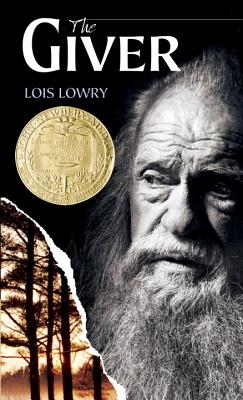
2.  The Giver by Lois Lowry

For my degree, I had to take an Adolescent Literature course at UMKC.  I had been used to reading out of anthologies, studying Shakespeare, falling asleep to Thomas Wolfe's Look Homeward, Angel, and learning gaelic and other Old English/anglo-saxon dialogues.  Great for starting conversations with other English majors, but generally not beneficial or entertaining in any other fashion.  I was interested even less in reading kids' books.  I had to do a lot of reading in college, and it was the one time in my life that I started to despise reading.  One of the course requirements for my class was that we had to read twelve books from a provided list of notable YA/chapter books.  Many of my selections were random, while a few based on recommendations.  The Giver happened to be one that I chose.    I tucked myself into bed one night with this book at the top of my stack, and I ended up reading it cover to cover that night.

Controversial:  Pills that stop "stirrings."  Unwanted babies and elderly alike are euthanized.

3.  A Wrinkle in Time by Madeleine L'Engle

This book's a classic, but I only first read it a couple of years ago.  I've read it once a year ever since, though.  Such a good story, with one of the most well-known and copied first sentence.  I actually made a book trailer a couple of years ago as a model for my students to make their own.


Controversial:  Heck, I don't know.  The idea that sameness is bad?

4.  The Knife of Never Letting Go by Patrick Ness

I loved this book, but why talk about it again when you can go here and read my inital review?

Controversial:  Language and brutality. 
5. Unwind by Neal Shusterman

Sometimes the best way to get a kid to read a book is to tell them why they shouldn't read it.  That happened to be the case for this book.  After I finished my book talk  for this book with each class, I had at least half of my students add their names to the waiting list to read this one.  I read this book when none of my books on hold were available and I had nothing else to read.  It was my first Shusterman novel, and I just thought it was going to be another average, ho-hum YA book.  Obviously it wasn't, or it wouldn't be on this list.  This story had a great premise:  You can "unwind" a child between the ages of 13 and 18 if you decide they'd make a better contribution to society as parts than as a whole.  In one chapter, the reader actually experiences a character getting unwound.  I feel ill just remembering it.

Controversial:  Uh, see last sentence.

**This blog post was probably spurred by two of the latest books I've read.  I highly recommend both, but I'm too tired to discuss either at this point in time.

*The Maze Runner by James Dashner
*Across the Universe by Beth Revis

Saturday, January 8, 2011

My vote goes to...


The 2011 John Newbery medal will be awarded tomorrow morning, as well as a plethora of other awards. I tried my best this fall to read many of the contenders for the award. Here they are with a short summary and review.

1. One Crazy Summer by Rita Williams-Garcia

I'm not sure what the hype was over this novel except that its subject centers around the Black Panther movement in Oakland, California. Delphine, Vonetta, and Fern are sisters from Brooklyn whose mother left them when Fern was still nursing. Delphine is now eleven, and her father thinks it's a great idea for the girls to spend the summer with the mother who abandoned them and wants nothing to do with them even when they get there.

The sisters spend their days at the local People's Center, where they eat breakfast and lunch and attend a children's class to learn about the "people's revolution." The reader hopes for the tender moment when the mom will begin to see the error of her ways, look at her girls, and realize she loves them and needs them in her life. It doesn't quite happen that way. This isn't enough of a historical fiction novel that you'll learn anything new, and it wasn't a story that I could put in my students' hands and they would love me for it. It was okay.

2. Turtle in Paradise by Jennifer L. Holm

This is another story set in the past (1935) that doesn't really doesn't have anything to do with the history of the time. This time the daughter, Turtle, is being sent to live with her aunt and cousins in Key West because her mother's new employer doesn't like children. There is a bit of adventure and a bit of self-discovery. I purchased this for the classroom, and while it was enjoyed by a few, the book fell apart too quickly, and who wants to read a book with its pages falling out? Overall, not the winner, but still a light-hearted read.


3. The Strange Case of Origami Yoda by Tom Angleberger

Whoa! Searched this on Amazon just using "strange case," and this title appeared before Dr. Jekyll and Mr. Hyde. Crazy. While this strange case isn't as classic as the latter, it was still a good read. I knew the kids would love it because the book, from its cover to its pages, are set up similar to the Wimpy Kid books, it has an origami Yoda on the front, and directions for how to make one it the back. That was really the best of this book for my students, the how-to directions.

Many students used this book for their reading response journals, and I was surprised to find many of them were unimpressed with the story. The biggest complaint? The story lacked character development because each chapter was merely a "case file" with a new character's personal account of his or her interaction with Dwight/OY. They felt the book was a bit gimmicky and that the sixth graders weren't relatable. Did I mention my reading students ARE sixth graders? I was pretty impressed with their observations, and I think author's should take note to remember whom they are writing for. Don't get me wrong; they will still pick this up because it is a quick and easy read. They call this kind of book (just like the Wimpy Kid books) a "break" from real reading.

4. Out of My Mind by Sharon M. Draper

This is the story of a girl with cerebral palsey. Melody is highly intelligent with a photographic memory, however she is unable to speak and is confined to a wheel chair because she is unable to control her body in the least. As she gets older, she becomes more and more frustrated that no one understands her. The only way to try to get her point across is by throwing a fit, and that doesn't always lead the recipient to guess correctly why Melody is upset.

Melody eventually gets a medi-talker and is finally able to communicate with those around her. However, it doesn't solve all her problems. People still view her as "retarded" because of the way she looks and acts, including a teacher at her school. (That ticked me off.)

Again, I was hoping for a Rudy moment, where underdog Melody can show everyone up, but the end takes a surprising turn that I didn't much enjoy.

5. My pick for this year's Newbery medal goes to Countdown by Deborah Wiles. The only reason I think it may not win is because it is very similar to last year's winner, When You Reach Me, sans time travel. This is a fun story of a fifth grader named Franny who has to deal with her best friend hating her for no good reason in the midst of the Cuban missile crisis.
This book has to be read, not listened to on audiobook, because it is part documentary, part fiction. I read this aloud to my students, and I knew, even with scanning the pictures, showing actual footage from YouTube of Bert the Turtle and JFK's speech, as well as playing the music Franny listens to in the story, that they still needed to see the words on the page. In almost every chapter there are historical quotes and lyrics to songs interspersed in the story. It sounds confusing to the students when I go from reading the narrative to reading the lines for "It was an itsy bitsy teenie weenie yellow polka dot bikini that she wore for the first time..." I just began skipping reading those parts because my kids kept asking, "Huh?" Also, Franny's thoughts can be random and strung together, having nothing to do with the current situation, so I would sometimes skip over her rambles.


Monday, April 27, 2009

Oprah's Reading List


Oprah.com has what I think is a great selection of titles for kids 10-12. I plan to use this list as my recommended summer reading for rising 5th graders. I like that there are books for both boys and girls, as well as a selection of genres from poetry to non-fiction. My kids will love seeing Jabberwocky updated to our time, after reading it in class. Unfortunately, the latest Wimpy Kid installment won't be released until the fall, so I had to be sure not to include it on my list. I know that would be the first choice of 90% of my students - girls and boys alike!


Edward’s Eyes by Patricia MacLachlan
Edward’s eyes and his self-taught ability to throw the perfect knuckleball are part of what make him extra special in an already large and loving family. The connection he shared with his siblings continues after his untimely death through a well-matched organ donation recipient.
Simon & Schuster/Atheneum, 2007. ISBN: 9781416927433

Bearwalker by Joseph Bruchac; illustrated by Sally Wern Comport
Baron knows that the “Bearwalker” is a half-human, half-animal beast that appears in tales told by his Mohawk people. When a school camping trip goes wrong, however, he finds himself facing a real, live monster who is just as deadly and dangerous as the creature from the legend.
HarperCollins, 2007. ISBN 9780061123092

Jabberwocky by Lewis Carroll; illustrated by Chistopher Myers
The classic nonsense poem at last makes sense when brilliantly illustrated as an urban playground one-on-one basketball game where intimidating size meets quickness and skill.
Hyperion/Jump at the Sun, 2007. ISBN: 9781423103721

Women Daredevils: Thrills, Chills, and Frills by Julie Cummins; illustrated by Cheryl Harness
What were women doing between 1880 and 1929? These 14 fascinating women were performing death-defying feats such as walking on the wings of airplanes, taming tigers, diving 60 feet into a tank of water on horseback and more.
Dutton, 2008. ISBN:9780525479482

The London Eye Mystery by Siobhan Dowd
When Ted’s cousin, Salim, disappears while riding the London Eye, it’s up to Ted and his sister, Kat, to figure out what has happened. Ted comes up with many interesting theories because, as he states, his brain operates on a different system (he has been diagnosed as having a “syndrome”). Will one of these theories solve the mystery?
David Fickling, 2008. ISBN: 9780375849763

Brendan Buckley’s Universe and Everything in It by Sundee T. Frazier
Brendan has a notebook full of questions, and he hopes to find all the answers during his summer vacation. Then, he meets the grandfather he never knew about, and new questions need to be answered: Does his grandpa want him around? And, if not, does it have anything to do with the color of Brendan’s skin?
Delacorte, 2007. ISBN 9780385734394

Igraine the Brave by Cornelia Funke
The daughter of two magicians, Igraine wants to be a knight. When their castle is attacked by a treacherous neighbor, Igraine proves her bravery.
Scholastic 2007. ISBN: 9780439903790

Cracker: The Best Dog in Vietnam by Cynthia Kadohata
A German shepherd must leave his boy to joins a military canine unit stationed in wartime Vietnam. His new job: using his acute sense of smell to sniff out deadly booby traps. A first-rate tale for readers who like animals and adventure.
Simon & Schuster/Atheneum, 2007. ISBN 9781416906377

Diary of A Wimpy Kid: Greg Heffley’s Journal by Jeff Kinney
Greg and his best friend, Rowley, adjust to middle school, where they are undersized weaklings. When Rowley grows more popular, Greg kicks off a chain of events that tests their friendship.
Abrams/Amulet, c2007. ISBN: 9780810993136

Savvy by Ingrid Law
Mibs can’t wait for her 13th birthday; in her family, that’s when one’s “savvy” or extraordinary talent appears. When her father is terribly injured just prior to her birthday, she is certain that her savvy can save him and embarks upon an odyssey full of quirky characters and colorful events.
Dial, 2008. ISBN: 9780803733060

The Willoughbys by Lois Lowry
Orphans, neglectful parents, a baby on the doorstep and a lonely billionaire are some classic themes in children’s literature that receive a humorous twist in this delightful, slim volume.
Houghton/Walter Lorraine, 2008. ISBN: 9780618979745

We Are the Ship: The Story of Negro League Baseball by Kadir Nelson
From 1920 to 1945, some of the roughest, fastest and most amazing baseball games took place in the Negro Leagues. Magnificent paintings and fascinating anecdotes introduce Rube Foster, Oscar Charleston and many other unsung heroes of the sport.
Hyperion/Jump at the Sun, 2008. ISBN: 9780786808328

Keeping Score by Linda Sue Park
Maggie knows everything there is to know about the sport of baseball and her favorite team, the Brooklyn Dodgers. She makes friends with a firefighter who shares her interest (even though he’s a Giants fan), but their relationship changes when he is shipped off to fight in the Korean War.
Clarion, 2008. ISBN 9780618927999

Billy Creekmore: A Novel by Tracey Porter
In 1905, 10-year-old Billy, storyteller extraordinaire, is rescued from an orphanage by his aunt and uncle. His life continues to take on many twists and turns, from the West Virginia mines to the circus, and he discovers much about himself along the way in this fast-paced, Dickensian-style novel.
HarperCollins/Joanna Cotler, 2007. ISBN: 9780060775704

Emma-Jean Lazarus Fell Out of a Tree by Lauren Tarshis
Quirky Emma-Jean loves to observe her fellow seventh graders’ behavior from afar. When she decides to help a few classmates with their problems, tension and humor ensues.
Dial, 2007. ISBN: 9780803731646

Nurk: The Strange, Surprising Adventures of a (Somewhat) Brave Shrew by Ursula Vernon
In this animal fantasy, Nurk, a shrew who likes clean socks, sets out hoping (sort of) for adventure. Inspired by his famous and heroic grandmother, he paddles down a stream in a boat he made from a snail shell. He rescues a dragonfly princess from the stream and becomes a reluctant hero who is happy to return to his quiet life at home.
Harcourt, 2008. ISBN: 9780152063757

Feathers by Jacqueline Woodson
Frannie can see that the new boy in school doesn’t fit in. His skin color is different, and everyone calls him “Jesus Boy,” but something about him fills her with curiosity, sympathy and a surprising feeling of hope.
Putnam, 2007. ISBN 9780399239892