Tuesday, June 26, 2012

Just Finished Reading...


Wonder by R.J. Palacio

A boy born with an extreme facial deformity is going to school for the first time in his life, middle school to boot.  August Pullman knows 5th grade is going to be tough, but his parents promise he can quit anytime. In order to live a normal life outside of his sheltered home environment, he needs his teachers and peers to view him as the normal kid he is.  But it won't be easy.

This is a book that stays with you long after you've read the last page.  The characters are real, vulnerable, and honest.  No one admits to being perfect, and Palacio shows that we all make bad decisions sometimes.  Auggie is a sweet kid who could be or belong to any of us.  I often forgot while reading that he has a facial deformity until he and I were both reminded when he would encounter strangers' stares and masked horror upon meeting him.  Being a kid in school is hard enough, but Auggie's challenges are magnified due to his appearance.

The story is told from several of the characters' perspectives, allowing the reader to place himself in diverse roles and view the same situation from different sides in order to understand motivations and actions.  There are an equal number of male and female viewpoints (though they could be interchangeable), and the chapters are short allowing for appeal to a wide range of readers.  Palacio chooses to focus on her characters' acts of kindness and courage despite fear instead of the many acts of bullying.  Julian, the ringleader who refused to accept Auggie as a friend, is the only main character whom the reader does not get to understand his motivations as Palacio never writes from his point-of-view.  I was curious about this decision and how she chose to deal with his character at the end.   Perhaps she is showing that there are people out there who are just mean for no reason other than that is their character (and in this case, the apple doesn't fall far from the tree).

This book is highly recommended.  I first read about it in a blog review and immediately wanted to read it, but there was a waiting list at my library.  Then I went on vacation with my in-laws, and my SIL was reading it with my niece for their book club.  My MIL and I both read it that week after my SIL was finished with it.  MIL was in tears at certain points, and my niece kept checking on me to see where I was at in the book.  Every time she would say, "Oh, that's a good part!"  I recommend this book exchange hands with all in your household as well.

#thewonderofwonder

Anti-bullying campaign - Take the pledge to Choose Kind!   http://choosekind.tumblr.com/

Monday, June 11, 2012

End of the Road

I've reached the finish line, or more accurately, the finish line has reached me in the #48HBC.  Upon visiting other participants' blogs, I've decided to include some of my "random reading" in my total hours.

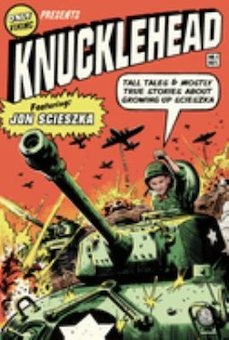
First off, I completed reading Jon Scieszka's Knucklehead: Tall Tales and Almost True Stories of Growing Up Scieszka.  It took roughly an hour, from 3 - 4:30 pm (I did have to stop and console my dog during a thunderstorm, then wrap him up in a blanket and swaddle him in my lap to finish reading.)  This book had its humor.  I enjoyed the short chapters and episodic tales.  Students would read this for pleasure, while teachers can use it for modeling autobio writing.  My complaints were that some of the chapters fell short, and the black and white family photos were hard to make out.

Yesterday, I also spent 40 minutes getting through only 10 pages of my MLIS course text: The Organization of Information.  In it, I learned all about the wonderful world of descriptive metadata, and more specifically finite vs continuing resources, FRBR entities, and the 8 levels of an ISBD surrogate record.  (In library school, you learn to use acronyms and abbreviations for just about everything, as annoying as it is.)

Upon awaiting the return of True Blood's 5th season (what a messed up show that is!) I read another 30 minutes of Watership Down.

I've also decided to count my time listening to 35 minutes of chapter one in One Second After by William R. Forstchen while I was getting ready for a dinner Saturday night.  Written in 2009, the main character Jon sure seemed out of touch with reality - buying Beanie Babies for his daughter's 12th birthday and looking utterly baffled at this thing called a text on his cell phone.  It didn't help that the introduction was written by his "good friend" Newt Gingrich.  That was a warning I should have stopped there.  I deleted the audiobook with no plans of listening to it any further, especially after reading more reviews about it.

Final Tally:

10 hours and 10 minutes reading
1 hour and 30 minutes blogging
5 completed books
866 pages read

If I donate $1 per 50 pages read, it would be roughly $17, so I think I'll round it up to an even $20.  My money isn't going toward RIF, however.  I have two non-profit organizations that I pledge my money to every year, and I'd like to keep that practice going.  Therefore, I'll be sending $20 to LiteracyKC and RoseBrooks.

In my haste to get this posted as near to 7 as possible, I forgot to mention how my weekend went for me.  I will say that for the most part, none of my reading selections were a total let down.  I enjoyed my time reading, but felt the guilt-laden pull of life preventing me from succumbing completely to the challenge.  Mornings worked best for me, as I could curl up on my couch with my coffee cup beside me.  Things like showering and cleaning the house tore me away in the afternoons.  (My husband cleaned our vents this weekend and left behind a wake of dust and ceiling popcorn on the floors of every room!  He, being satisfied with a job well done, didn't clean up after himself, so I had to get out the vacuum and broom and sweep everything up in every room.  I also had to clean the kitchen, fold laundry, pick up, etc.)  It's hard for me to sit still for long.

My Reading Space:


Sunday, June 10, 2012

Just Finished Reading...

Checking in with the 48HBC...

After yesterday's posting, I didn't really have time to do any extra reading, so this morning I took up again with Watership Down.  I read 128 pages of it, essentially Part 2 of the story before switching to some shorter reads  to feel a sense of accomplishment (and to have something to post about). 

Watership Down by Richard Adams, Part II - pages 129-257, 3 hours

This story is amazeballs.  How can a book about a small warren of rabbits be so compelling?


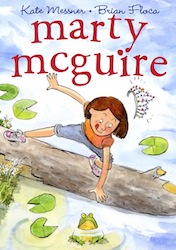
Marty Mcguire by Kate Messner and Brian Floca - 131 pages, 45 min.

Marty is getting a lot of compliments via reviews on Goodreads, but I have a problem with the authors vilifying a girl who likes to play dress up.  What's so wrong with that?


Big Nate: In a Class by Himself by Lincoln Peirce - 214 pages, 1 hour

I enjoyed the humor of this story more so than Wimpy Kid's whiny, self-centered Greg.  Obviously, very predictable and ridiculous antics, but fun all the same.


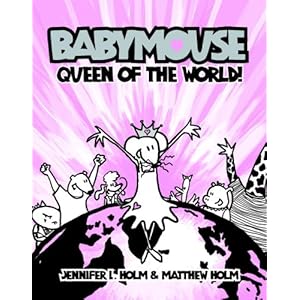
Babymouse: Queen of the World! by Jennifer L. Holm and Matthew Holm - 93 pages, 20 min.

Is this what it's like to have ADHD or be on crack?  My first graphic novel for kids. 


Totals so far for the day:

3 books and 1 not yet completed
566 pages
5 hours and 5 minutes

Time blogging:  15 minutes


Saturday, June 9, 2012

Just Finished Reading...

Enclave by Ann Aguirre

There is no new territory covered in this teen dystopian/apocalyptic first book in Aguirre's Razorland series.  It starts out with the cliched right-of-passage ceremony in which fifteen-year-old, Girl15, is named Deuce and given the marks of her new position as a Huntress.  Deuce's people live underground in an enclave called College, where no one lives longer than their twenties.  The subterranean dwellers are sorted into one of three responsibilities:  Hunters, Breeders, and Builders.  Builders are in charge of creating everything needed for survival.  Breeders, ahem, breed with other Breeders to keep the population going and care for the brats until they are old enough to attend their own naming ceremonies.  Hunters have the most regarded jobs of patrolling the dangerous tunnels, snaring meat and killing any Freaks (some distant relation to humans with sharp teeth and claws who live on flesh of humans as well as their own fallen) they may encounter along the way.

Deuce's small world is very much that of a dystopian society: elders she had grown to trust with blind deference may not be capable of keeping their enclave safe, including the strict rules set to ensure their survival.  Her partner, Fade, comes from Topside, though no one believes this because nobody survives above ground.  As Deuce comes to trust Fade, she begins to reconsider all she was taught as a brat. 

While nothing new in this story, Aguirre's decision to not disclose Deuce's world and its history of coming into being outright made me curious to learn more of College and the other underground enclaves, as well as the world above and how it came to be.  Not all is illuminated, but hopefully more will be revealed in the books to come. 

Recommended for teens. Pause for violence, gore, and references to rape.

48HBC
time spent reading 3.5 hours
time spent blogging 45 min.
pages read 262

Wednesday, June 6, 2012

Getting Ready for the 2012 48-Hour Book Challenge

This is officially the seventh annual 48 Hour Book Challenge but my fourth year participating.  This year it happens to fall on a busy weekend for me.  In previous years I had been freshly finished with the school year and in need of serious downtime, so it was easy for me to wipe my schedule clean for a weekend to stay home and read.  This year I am in the MLIS program at FSU and have responsibilities that require me to work on the weekends, and there are some personal engagements on the calendar that I can't ignore.  That being said, I will do my best to read as often as I can in between everything else.  My goal will be 15 hours, but that may be reaching.  While my time may be limited, I have no shortage of books to read.  Here are some possibilities:

From the library -
Millicent Min, Girl Genius by Lisa Yee
Babymouse, Queen of the World! by Jennifer L. Holm and Matthew Holm
Marty Mcguire by Kate Messner and Brian Floca
Knucklehead: Tall Tales and Mostly True Stories About Growing Up Scieszka by Jon Scieszka
Big Nate: In a Class by Himself by Lincoln Peirce
Watership Down by Richard Adams (currently reading)

My personal collection -
The Fault in Our Stars by John Green
When the Whistle Blows by Fran Cannon Slayton
Enclave by Ann Aguirre (gifted to me in the Book Blogger Holiday Swap)
Quiet: The Power of Introverts in a World That Can't Stop Talking by Susan Cain (on my Nook)

For school -
Readings in Reading Instruction: Its History, Theory, and Development by Richard D. Robinson
The Organization of Information by Taylor and Joudrey

Thursday, March 8, 2012

More Books

Yesterday was the 100th Art Walk in downtown Jacksonville, so we hit it up hoping they would have some special events going on.  Well, the art/crafts/solicitations (really, there was a Scentsy stand, and at one point we walked into what looked more like a wedding expo than an art walk) were slightly underwhelming, but the local street bands provided good music for our ears.


We ended up going into Chamblin's to look around, where I found a couple of books.  It's harder getting lost in the Uptown store than the gargantuan store on Roosevelt.  I ended up with three books, setting me back $38.  It was quite a shock after getting well over 50 books at the JPL sale for less than that.  Oh well.  Here's what I found:

Daphne Du Maurier's My Cousin Rachel.  I was looking for a good copy of Rebecca, but those were all old, crusty, pocket paperbacks.  I never heard of this title, but I figure if I enjoy it half as much as I did Rebecca, it'll be good enough for me.

John Green's The Fault in Our Stars.  I haven't read a bad John Green book yet.  I took Looking for Alaska on vacation with me one summer, and it consumed me until I finished it.  My nieces probably didn't appreciate that.

Joyce Carol Oates's Dear Husband, stories.  I'm starting to have a thing for reading short stories.  They're lovely when I only have a few minutes to read, or right before bed when I don't want to stay up half the night because I can't put a book down.  I like that Oates can be dark and a bit creepy.  She has a way of putting a death grip on you, and even if you're disturbed by what you're reading, you can't stop.

On a side note, I am having a nice reprieve from reading children's books.  I still have my weekly books to read for my children's lit class, but that's the extent of my reading for that genre right now.  After my bibliography assignment, I needed a break from the children's department.  I'm getting into poetry as well, and am currently reading Money Shot by Rae Armantrout which I borrowed from the library.  I brought it along to the art walk last night, and as I was sitting outside of Burrito Gallery reading, a kind lady walked by and handed me a flyer to use as a bookmark. 


Monday, March 5, 2012

JPL Book Sale

JPL had a book sale this weekend at their University Branch warehouse.  We went Saturday just to check it out and found a few good books.  It was almost overwhelming, though, looking through the stacks.  The workers there told us to come back on Sunday, because the books (which were priced between 50 cents and $2) would only be $10 a bag - as full as you can make it.  I'm always one to take up a challenge, so I headed back today.  However, I got there at noon when it was just opening, and there was already a line around the building.  So I left.

I came back, though, around 2, with my husband, and we had an unspoken (friendly) competition to see who could get the best money's worth of books.  He came out 23 books to my 15, but most of mine were either professional resources, award winners, and/or best selling authors, as well as hard back and in good condition. So I figure, I win.


Day One:  13 books
  Trav picked up four of the 5 Piers Anthony series.  He found the last book on Sunday.  I grabbed a Laur Bush Bio, YA books Going Bovine and Into the Wild, Oates' We Were the Mulvaneys, and three of my favorite children's books:  Walk Two Moons, Wrinkle in Time (with related short stories at the end), and the second book in the Tripod's series, City of Gold and Lead.  Oh, and Ray Bradury's short story collection The Cat's Pajamas, which is my current bedside reading.

Day Two: Trav's finds
 He picked up:
almost the complete Mission Earth series from L. Ron Hubbard, 
some "lawyer" books by John Grisham, 
spy novels, 
Robert Ludlum's Bourne books, and
 the last book in the Clan of the Cave Bear series, to name a few.

Day Two: My finds


Professional Resources:
From Cover to Cover:  Evaluating and Reviewing Children's Books,
Bookplay: 101 Creative Themes to Share With Young Children, and
The Kids' Book Club Book

Children's/YA:
(all in hardback, mint condition, I might add!)
After Tupac and D. Foster by Jacqueline Woodson,
Hush by Jacqueline Woodson,
The Loud Silence of Francine Green,
Hope Was Here,
When the Whistle Blows,
Moonpie and Ivy (mother-daughter book included in my bibliography),
What Would Joey Do? (from Newbery winner Jack Gantos)

Sadly, I don't know a lot about adult fiction because I don't spend a whole lot of time reading it. (I'm trying to fix this.) I REALLY wanted a copy of Daphne DeMaurier's Rebecca in hardback and an old edition, but I couldn't find that book anywhere, and the classics section was completely picked through.  Here's what I found:
The Kite Runner,
From Dead to Worse (#8 in the Sookie Stackhouse series),
S.E. Hinton's Hawkes Harbor,
Sarah Dessen's This Lullaby 
(I remember my sister loving this author when she was in high school). and
Carl Hiassen's Nature Girl.

Now I need to figure out where to put all of these.

Thursday, March 1, 2012

Mother-Daughter Fiction for "Tween" Girls

For my Information Needs of Children class, I had to create a bibliography of 20 books of outstanding quality on the topic of mother-daughter fiction for girls around the around the ages of 10-12.  I did a LOT of reading for this assignment and found some great books.  Today, however, I'm going to provide just five of my personal most favorites from that list.


#5 - Pieces of Georgia by Jennifer Fisher Bryant (2006) NY: Alfred A. Knopf.

Georgia, 13, is on Mrs. Yocum’s “At-Risk” list ever since her mother died from pneumonia six years earlier. Mrs. Yocum provides Georgia a notebook, suggesting she write down any thoughts, feelings, or questions she would ask her mother if she were alive. In journal entries to her mother, written in verse, Georgia tells of the anonymous gift she received for a free membership to the local museum, her and her father’s struggle dealing with the death of her mother, her friend Tiffany’s struggle with trying to do it all, and her own journey to becoming an artist like her mother.


I was rooting out loud for Georgia. She's a quiet, reserved girl and slightly odd (like most great artists), but she deserves the world. This book evokes happy tears.


Check it out on Goodreads.

#4 - Ida B...and Her Plans to Maximize Fun, Avoid Disaster, and (Possibly) Save the World by Katherine Hannigan (2004) NY: HarperCollins Publishers

Ida B. Applewood (not to be confused with her mother’s name - Ida Applewood) lives on an orchard with her parents and is friends with the trees. Life is swell for this fourth grader, until one day Mama has some bad news, and the repercussions of that news Ida B.’s not going to like one bit. Ida B. is mad and soon feels her heart turning into a hard stone, leaving her to wonder if she will ever be happy again.

I first read this back in the summer of 2009 and fell in love with Ida B. Although it sounds selfish for her to be mad at her mother for having cancer, I was sympathetic to her feelings. I remember being a little girl and being so angry at the world I could explode. It was touching to go through the experience with her.

Check it out on Goodreads.


#3 - Walk Two Moons by Sharon Creech (1994) NY: HarperCollins Publishers

Thirteen-year-old Salamanca Tree Hiddle (Sal) takes a cross-country road trip with her grandparents to visit her mother in Idaho, who had earlier left Sal and her father behind in Kentucky. Along the way, Gram and Gramps ask Sal to entertain them with a story, so she tells one of her best friend, Phoebe, whose mother also had gone missing. Through telling Phoebe’s story, she ultimately tells her own.

This is another old favorite, read in the summer of 2009 as well. (2009 was a good year for me - reading wise!) For the longest time before reading this book, I assumed it was a Native American tale from the looks of the cover and the title. Very misleading. This is a great story, entertaining and touching. Just like the movie "Titanic," you know how it's all going to end, but you keep hoping and crossing your fingers that it'll miss the iceberg.

Check it out on Goodreads.


#2 - The Summer Before Boys by Nora Raleigh Baskin (2011) NY: Simon & Schuster Books for Young Readers


Twelve-year-old Julia spends the summer before seventh grade with her “cousin” (who is actually her niece) of the same age. Julia’s mother is serving as a nurse with the National Guard in Iraq, and her father (Eliza’s grandfather) works long hours. She and Eliza have been best friends all their lives, spending hours playing dolls and pretend, but this summer things are different for Julia. Worrying about her mother and the next chance she will have to see that cute boy, Michael, begins to take up more of her attention, straining her friendship with Eliza.

Of all the books on my list, this is the one I really wish had been written when I was a girl and one that I think all girls will love. I remember that age so well when one week we're playing with Barbies and the next we're talking about boys!

Check it out on Goodreads.


#1 - My Name is Mina by David Almond (2011) NY: Delacorte Press

Mina is strange. Mina is weird. Mina is different. She does not fit in at her school, exasperates her teachers and principal, and is teased by her classmates. Her mother consequently decides to home school her. Mina spends her days sitting in her tree, writing in her journal, playing with words, and dreaming she can fly. Sooner or later though, Mina realizes she is going to have to come down from her tree and find her place in the “real” world.


This is one of those books that is inspires great teaching. After reading this, I want so badly to go back to the classroom so I can tell my students we're throwing out homework and replacing it with "Extraordinary Activities!"  David Almond uses nine-year-old Mina to exude his immense wisdom, and I'm glad I got schooled.  This book is a prequel to Skellig, which means you don't have to have read that to appreciate this book.  I haven't read it yet, but after this was so phenomenal, I think I have to.
          Check it out on Goodreads.


Saturday, February 4, 2012

Reflecting on Reading


These questions are taken from p. 57 of Reading Matters: What the Research Reveals about Reading, Libraries, and Community


1.  What is the first book that you can remember either having read to you as a child or reading yourself?  What can you remember about it?

We didn't have story time in my family.  Reading happened, but it wasn't a shared activity.  The first book that I remember reading all by myself was The Golden Children's Bible.  I know that I had read many picture books before that, because my mom had signed my brother and me up for a program that delivered us a stack of shiny new books each month.  It was probably a Scholastic program.  But I distinctly remember sitting on my bed, deciding to take on the Children's Bible, and I remember that when I finished I was so proud of myself that I ran to my mom to tell her what I had done.  The images are probably what stuck with me the most, and that's why I was able to figure out which exact children's Bible it was that I read.


2.  Can you think of a book/story that really stands out in your memory?  What was special about it?

There are so many books that stand out that I don't know how I can narrow them down, so I guess I'll start from the beginning.  There is one paperback picture book I received through the Scholastic reading program that has always stuck with me, but annoyingly I can't recall the title nor can I find it anywhere.  It's about a little girl who is afraid of EVERYTHING.  She doesn't like taking baths because she's afraid she'll get sucked down the drain.  She doesn't like escalators because she's afraid she's going to get pulled into the belt, etc.  I loved that book.  It's obviously not a popular or well-known story, or I might have found it by now.  Sad face.  Most of my reading in childhood was serendipitous.  The books that I enjoyed the most, or have a lasting impression of, were books that fell into my lap one way or the other, not the books that I picked for myself from the library.

3.  What do you remember reading next?  Next?  After that?

I can't pull out a timeline from my memory of childhood reading.  I'm sure there were a ton of books I read that didn't stick with me.  Perhaps the books that I owned stay with me the most, because as they were easy to access, I read them the most.  I remember around second grade my grandpa gave me a picture book that I found "boring," but read again and again, about a girl on a farm in the country during the winter not doing a whole lot.  I think she went to church on Sunday, but I can't recall.  I think I remember a black horse(s?) pulling a sleigh.  I remember the book seemed "elegant" to me - it was hardback with a shiny jacket cover, glossy pages of white with embedded pictures and text underneath.  And the cover was forest green with a snowy picture in the center.

4.  Was there anything in your childhood experience that you would say fostered reading?  Discouraged reading?

I think the adults in my life fostered reading for me - teachers, parents, grandparents.  The simple act of giving me books - whether as gifts, garage sale finds, pillaged from the lost and found, or a monthly book delivery program, and visits to the public library - all were signs that reading is an act of enjoyment.  As I got into my preteen years and started to enjoy books like Goosebumps, Christopher Pike, and (shamefully - but not really) V. C. Andrews, I did have a couple of (boy) family members who told me that my reading choices were not REAL reading, not REAL books.  That's when I started to develop guilt for certain reading choices and the idea that all reading wasn't created equal.  Meanwhile, they were reading Stephen King, and if I had the wisdom I have now I could have argued the same about their reading choices, but alas, I was only twelve.

5.  When you were a child, did you think of yourself as a reader?  

Quite simply, yes.  What kind of reader?  Good?  Poor?  Well, that's another story.  I probably didn't think too highly of my reading abilities.  I was never the smart kid in class until I went to an inner-city school; then somehow I was seen as the smartest kid in class.  If it hadn't been for that boost of self-confidence, I probably would have always been an average, or under-accomplishing, student, because no teacher ever thought much of me before then.

6.  How, if at all, did your reading interests change as you reached adolescence?

I think the Goosebumps series was the gateway to less savory reading choices.  Again, I became obsessed with Christopher Pike books in middle school, and most of the teacher-recommended reading I hated.  I remember having to read Cynthia Voigt's Homecoming and Dicey's Song in seventh grade, and I just really didn't care for them.  My sophomore year of high school, our English teacher had a whole unit on YA novels.  She had class copies of ten or twenty different titles featuring authors like Chris Crutcher, Robert Cormier, and Lois Duncan.  She book talked each one, and they were pretty scandalous.  I learned about the guy who pokes his unit through the bottom of a popcorn bucket in the movie theater so that when his date reached down she got a handful of something else.  We were shocked what our teacher was telling us, but she was 70 and crazy and would spend almost an entire class period telling us about Woodstock.  In high school, most of my book choices came from friends' recommendations.


7.  How do you choose a book to read?

Again, recommendations are an important factor in my book selections.  Currently, most of my reading is for my grad classes and keeping up with the latest in children's literature.  The library plays a role in what I read when, too.  I'll put a ton of books on hold, and so I usually read whatever it is that has become available before I read something that's sitting on my bookshelf, because I know I only have so much time to read the library book before it's not available anymore.

8.  Where do you get the books you read?

I'd say about 80% of the books I read are from the library.  The remaining 20% are books that I've either purchased or have had given to me.  I have a Nook, so it is quick and easy to purchase e-books instantaneously, but I still like physical books as well.
Really, Oprah?

9.  Are there types of books that you do not enjoy and would not choose?

Harlequin romance novels, books from Oprah's book list (I've never enjoyed any of her recommendations that I've tried), dry, self-indulgent literature wherein the author is just showing off his craft but not actually saying anything important, books written and advertised for the common "housewife" usually about a middle-aged woman in a boring marriage with 2.5 children who does something radical like joins a quilting club or has an affair - basically that whole shelf in Target labeled Fiction.

10.  Has there ever been a book that made a big difference to your life in one way or another?  (probe:  What kind of difference?  How did it help you?)

Ray Bradbury.  The Martian ChroniclesFahrenheit 451Dark They Were, and Golden-Eyed.  I don't know that these books made a difference in my life except that they made me love reading even more.  I just love his books.  Fahrenheit 451 became my platform for the importance of reading, and perhaps my decision to become a reading teacher and now a library student.


11.  What would it be like for you if for one reason or other you couldn't read?

This question is ambiguous.  I'm not sure if the author means "can't read" as in illiterate, or "can't read" as in I'm prohibited from doing so, or "can't read" as in there is absolutely no time for it.  If I'm illiterate, then my world would be very limited on what I could do.  I couldn't write a blog, couldn't check up on friends on Facebook, wouldn't be a grad student, wouldn't have a great job, etc.  If I was prohibited from reading, I'd probably watch more television.  If I didn't have time, then I'd be sad and stressed out because reading is calming and therapeutic for me, as well as it helps me make sense of my world. 

12.  If you could get an author to write for the "Perfect Book" what would it be like?  What elements would it include?

That's a hard question.  I guess it would have the romance and dark turmoil of Rebecca, the author's views within Things Fall Apart, and the sci-fi world of either a Ray Bradbury or Kurt Vonnegut.  Although, I think all of those elements mixed together would probably make a terrible book.  I think each of those on their own are perfect books, so why can there be only one?


13.  What would you say is the role of reading in your life? 

I would say it's my livelihood.  It provides me a community to which I belong.  It gives me a larger view of the world I live in.  It lets me live 10,000 lives.  It teaches me lessons.  It educates me.  It entertains me.  It's solid good fun!


Thursday, December 29, 2011

Just Finished Reading...

Okay for Now by Gary D. Schmidt
          This book is on the top of about every mock Newbery 2012 award list, and I can see why. Doug Swieteck is about the most real and well-written character I've read in a long time in young fiction. The entire story spans Doug's 1968-69 school year beginning with him and his family moving to stupid Marysville, as he deems it.
          Doug has a meekly sweet mother and not-so-loving father, as well as two older brothers.  The oldest, Lucas, is away fighting in the Vietnam war, but we get an idea of his character when Doug does or says something "jerky" and compares it to his brother. Now I sound like Lucas.  That's something Lucas would say.  Christopher, the second oldest brother, seems to be another chip off the old block.  He is ruthlessly mean to Doug, stealing his Joe Pepitone-signed hat, and making fun of all he does.  Doug has to hide anything valuable or special to him from his brother.  The boys' poor attitudes are a result of their father's character.  He is negative, abusive physically and through his words.  Doug's mother is the only saving grace of Doug, but she does not stand up to her husband.
          Doug's story has its ups and downs - things look up and then something happens to dampen his spirit.  His teachers and principal think the worst of him for crimes his brother allegedly committed.  People in town question his nature as well.  And, of course, there is the crotchety librarian who scolds Doug for waiting on the steps of the library to open.  What librarian would do that?
          There is so much addressed in this book that one could spend days discussing - John James Audubon's Birds of America and how Doug can associate what's happening in each painting with what's happening in his life, domestic violence, the controversies of the Vietnam War, Jane Eyre!, baseball and the New York Yankess, NASA's space program and landing on the moon, as well as other significant events of the 60's, etc.  Doug is such a dynamic character, as well, that the story almost reads as a memoir.  A nice surprise at the end of the book is a teaching guide full of discussion questions and activities, along with the first chapter of The Wednesday Wars, a companion to Okay for Now.

Add to your to-read list.

Just Finished Reading...

The Wall... Growing Up Behind the Iron Curtain by Peter Sis

          I placed this book on hold at my local library along with some other children's picture books.  I got a call yesterday that a few of my book selections were available, so I headed over, found a seat, and got to reading.  This book was compactly educational in regard to the Cold War and Communist Soviet Union.  I grew up hearing about the Berlin wall and "Mr. Gorbachev, tear down this wall!" I knew about the Cuban missile crisis. I knew we were at odds with Soviet Russia, but I didn't understand the conflict any further than we had differing governing ideologies.  I also liked that the introduction concisely explained the link between the events of WWII's aftermath to the onset of Russian-formed Soviet Union, because many times we study events of our history in isolated segments, and we forget to examine the cause-effect sequences in between large events. This book told the story of author Peter Sis's first-hand account of life in then Czechoslovakia and how the Prague Spring of 1968 helped him to awaken from his "brainwashed" youth.  Art and music played a huge role in his awakening.  I've read many fictional dystopian novels and never fully realized that these societies truly existed/exist today.  I highly recommend putting a copy of this on every school/classroom library shelf.  It's a great jumping off point for further research and examination.

Add to Goodreads To-Read List.

Saturday, November 26, 2011

Just Finished Reading...


The Help by Kathryn Stockett
*read by Jenna Lamia, Bahni Turpin, Octavia Spencer, and Cassandra Campbell on audiobook


“Everyone knows how we white people feel, the glorified Mammy figure who dedicates her whole life to a white family. Margaret Mitchell covered that. But no one ever asked Mammy how she felt about it.” Kathryn Stockett, The Help 

Well, Mammy's still waiting for someone to ask her...
      
          I started out listening to the audiobook of The Help on a six hour trip back from Pensacola Beach.  I was never really excited to read it, because I usually don't find myself enjoying many of the mainstream best-sellers in women's fiction - or "chick lit" I like to call it.  It happened to be the only book available to check out on my online library account at the time, so when my companion and I were finally bored enough on our drive home, we turned it on.  Right away, we were both entertained.  The narrators all did an exceptional job, and the narrator for Minny even went on to play her in the movie. 
          We continued listening to it on a two hour drive to Orlando and back over the weekend, and when I got home, I decided I didn't want to have to wait to finish reading it; so I ran out to Barnes and Noble and bought the paperback.
          I'm not going to waste time summarizing the story, because just about everyone's read it or seen the movie, or at least know the premise.**   I'm just going to jump in with my reaction, so I apologize for any spoilers I may reveal.  The Help is definitely an entertaining read.  The characters are well-developed, and I felt invested in their stories.  Should this book be considered a champion of the civil rights movement and the victorious black women of the South?  Heavens, no.  It was, after all, written by a white woman, Kathryn Stockett, who, like Skeeter, grew up in Mississippi.  Stockett was also sued by her own brother's housekeeper for using her likeness to create the character Aibileen. The suit was only thrown out due to a statute of limitations.  The character of Skeeter is not interested, nor does she know much about, the black woman's struggle under the Jim Crow era, and only initially decides to create a book about black housekeepers in Jackson because she has a dream to be published.  The character Aibileen in the story is even responsible for giving Skeeter the idea to write the book.  So why anyone would mistake Skeeter as the heroine of the story is beyond me.  Aibileen and Minny risk their jobs and safety to write this book.  Skeeter risks being ostracized from Hilly's League.  Her biggest worries are getting her hair to straighten and to find a man to marry so that her mother will stop pestering her. Skeeter is merely the editor of the book, so it bugs me that she takes so much credit for it. 

 Things That Also Bothered Me

          Aibileen - I can't believe Aibileen would be truly sorry to leave her job working for Elizabeth.  She's sad to leave Mae Mobley and perhaps the steady income, but I would think she'd be jumping for joy to be rid of those women and their bridge club lunches.  Plus, she gets a job writing for the paper, and there's potential their book will bring in more money as time goes on.
          Minny - Minny's story was my favorite to read.  She's a strong, outspoken woman full of sass, so I was surprised that she suffered from spousal abuse.  She addresses it in the end of why she doesn't fight back, and eventually leaves Leroy, but I have to wonder why the author thought it was necessary to put this in.  It seems that it's only the black men who are seen doing the abusing and leaving and not the white men.  I'm not sure what the author's message is here.
          Skeeter - Beyond what issues I already have with this character, I can't understand her friendship with Hilly.  Skeeter speaks in a disparaging manner about her closest friend, and can't trust her to not snoop in her satchel, and yet because they've been friends since childhood, she reasons that's justification enough to have stayed  her friend so long.  Also, the storyline with Stuart seemed nothing more than a way to show the "sacrifices" Skeeter makes for her dear new friends publishing deal.  I think the story would have been much better if Skeeter wasn't in it in the first place.  This wasn't her story to tell.  I'll be interested to see how the movie portrays her, but I'm sure it will be much the same since Stockett and her close friend were the screenwriters/director for the film.  I hope that the readers and audience of this story realize the irony/hypocrisy of it all.  It is still a white woman telling her version of the black woman's story.  The cheesy declaration at the end that the point of the book is to show that there's really not much different about us women is the most ridiculous revelation Skeeter could make.  I didn't see a whole lot of similarities between Minny and Hilly, Minny and Celia, or Aibileen and Elizabeth.
          Plot plunks - There were a lot of plot secrets Stockett used to keep the story intriguing:  What is wrong with Celia?  What happened to Constantine?  What was the "horrible thing" that Stuart's ex-fiance did? And all of them were either predictable, overly-dramatized, or both.

          Overall, I don't discourage anyone from reading this book.  It is an entertaining read, probably more so as audiobook, but please take it as the work of fiction that it is and not a revolutionary memoir of the Jim Crow south.

**After spending the holiday at my grandmother's house, I feel obliged to mention the premise, as she had heard about the book from her friends and tried to download it on her Nook, only to have accidentally downloaded The Help, A Novel, or The Secret Confessions of a Traditional Housekeeper by Shay Arthur.  She complained, "I don't know why everyone says that book is good.  I thought it was so boring."  She started to tell us about the plot, and that's when we realized she had purchased the wrong book. 
          The Help is told from the point of view of three women: Aibileen, a housekeeper in Jackson, MS who has worked her whole life working in white people's homes and raising their babies; Minny, Aibileen's friend and fellow housekeeper who gets in trouble for her sass-talking, and Skeeter, a recent college graduate who is a socialite and friend of the women Minny and Aibileen work for. Skeeter's dream is to become either a writer or journalist, and by way of talking with Aibileen, decides she wants to write about housekeepers' experiences working in the south.

I apologize if this review is not the most cohesive. I wrote it over the span of my week on Thanksgiving holiday - ten minutes here and there.

Thursday, November 3, 2011

Just Finished Reading...

The Son of Neptune by Rick Riordan

While I enjoyed last year's The Lost Hero starring Jason Grace as the Roman demigod and amnesiac, I felt there was something missing.  Leo is the only character who sticks out in my memory from my reading of the first installation of the new Heroes of Olympus series.  Maybe because he *SPOILER* appears in book two.  I didn't feel as invested with the characters as I had with Percy, Annabeth, and Grover from the first Percy Jackson and the Olympians series. 

The first two books are a set up for the new fight.  In PJatO, the fight was with Kronos, in HoO, the fight is with big, bad mamma Gaea.  The Greek and Roman camps are unaware of each other, but will now be forced to work with one another in order to fight the mother of creation. 

In Son of Neptune we find out where Percy's been the whole time Jason and his new gang were fighting wind gods and flying around on mechanical dragons on a quest to free Hera/Juno.  Percy wakes up from a long nap and finds himself at a camp for Roman demigods, Camp Jupiter.  He meets two campers, Hazel and Frank, who helped save his life but are of course not highly respected by the other campers.  I thought these characters were more richly drawn than the characters in the previous book, and so I cared more about their stories.  Hazel gets flashbacks that render her unconscious, and Frank, though big and beefy, doesn't think much of himself.  Percy is his usual self, even with losing his memory, full of wit, humor, and courage only a true hero possesses.  Their quest is to free the god of death, Thanatos (imprisoned somewhere in Alaska), defeat the king of giants, Alcyoneus and rush back to help defend Camp Jupiter from attack by the Feast of Fortuna.  No problem, right?  Actually, that's my only quip with these stories.  It seems too easy for these half-bloods to defeat these ancient (and usually stupid) monsters.  I would think the gods have to be on their sides for them to always be so victorious.

What I love about this new series is that (and I said this with the first book) it introduces the reader to Roman mythology.  The reader sees that not only do the names change of the gods, but that their personalities are altered as well.  We see this mainly with the character of Ares/Mars in book two. 

Riordan gives us more of what we love:  good battles, a tiny sliver of puppy love, lots of humor, and a world where fantasy and reality collide.  If you haven't read The Lost Hero, you could probably skip it and read The Son of Neptune without missing a beat. 

Oh, yes.  My only other problem with the book was that I bought it as a Nook book, and the spacing was jacked up throughout.  Slightly annoying.

Tuesday, October 4, 2011

All You Need Is Love... and Individuality

My favorite genre of Young Adult fiction is dystopian fiction.  Dys meaning "not" and topian taken from "Utopian" or an ideal society.  Dystopian societies are usually formed out of tyranical rule.  Its citizens have few freedoms and many laws, many which seem outlandish to the reader, all in an effort to form a society that is seemingly perfect and without conflict.  The problem is that it is these laws and limited rights that breed conflict.  Authors tend to create these fictional societies as a way of commenting on our own forms of governing conventions.  Authors pose questions through their stories, asking students/teens/readers to examine and/or reexamine their views on many principles, easily tying in to conversations regarding political science, history, and the humanities.  Dystopian societies are often set in the future, and that is why these books are generally considered a sub-genre of science fiction. 

As Banned Books Week was a little over a week ago, and I like to do things in my own time, I've decided I would go through my favorite YA books in this typically challenged genre.
1.  Fahrenheit 451 by Ray Bradbury

What can I say, Ray Bradbury's the boss.  This book is for everyone who believes in the power of books.  And if that's not enough, there's a killer spider-robot chase scene.  I believe in the importance of rereading and reading again good books, but I don't do it enough.  Except with this book and a few others. 

Maybe the books can get us half out of the cave.

Umm... for the millenials, at what temperature does an eReader burn?

Controversial:  Montag's pill-popping wife.

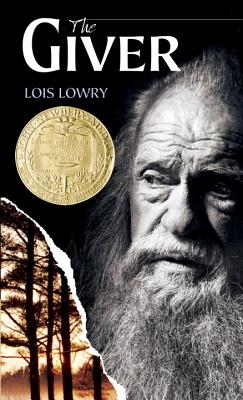
2.  The Giver by Lois Lowry

For my degree, I had to take an Adolescent Literature course at UMKC.  I had been used to reading out of anthologies, studying Shakespeare, falling asleep to Thomas Wolfe's Look Homeward, Angel, and learning gaelic and other Old English/anglo-saxon dialogues.  Great for starting conversations with other English majors, but generally not beneficial or entertaining in any other fashion.  I was interested even less in reading kids' books.  I had to do a lot of reading in college, and it was the one time in my life that I started to despise reading.  One of the course requirements for my class was that we had to read twelve books from a provided list of notable YA/chapter books.  Many of my selections were random, while a few based on recommendations.  The Giver happened to be one that I chose.    I tucked myself into bed one night with this book at the top of my stack, and I ended up reading it cover to cover that night.

Controversial:  Pills that stop "stirrings."  Unwanted babies and elderly alike are euthanized.

3.  A Wrinkle in Time by Madeleine L'Engle

This book's a classic, but I only first read it a couple of years ago.  I've read it once a year ever since, though.  Such a good story, with one of the most well-known and copied first sentence.  I actually made a book trailer a couple of years ago as a model for my students to make their own.


Controversial:  Heck, I don't know.  The idea that sameness is bad?

4.  The Knife of Never Letting Go by Patrick Ness

I loved this book, but why talk about it again when you can go here and read my inital review?

Controversial:  Language and brutality. 
5. Unwind by Neal Shusterman

Sometimes the best way to get a kid to read a book is to tell them why they shouldn't read it.  That happened to be the case for this book.  After I finished my book talk  for this book with each class, I had at least half of my students add their names to the waiting list to read this one.  I read this book when none of my books on hold were available and I had nothing else to read.  It was my first Shusterman novel, and I just thought it was going to be another average, ho-hum YA book.  Obviously it wasn't, or it wouldn't be on this list.  This story had a great premise:  You can "unwind" a child between the ages of 13 and 18 if you decide they'd make a better contribution to society as parts than as a whole.  In one chapter, the reader actually experiences a character getting unwound.  I feel ill just remembering it.

Controversial:  Uh, see last sentence.

**This blog post was probably spurred by two of the latest books I've read.  I highly recommend both, but I'm too tired to discuss either at this point in time.

*The Maze Runner by James Dashner
*Across the Universe by Beth Revis

Sunday, June 5, 2011

#48HBC Calling It Quits

I'm throwing in the towel. Mainly because I haven't enjoyed the majority of books I've chosen to read this weekend, but also because I've gained back all the weight I had lost this week, and I'm about to be living the single life for a week while my husband leaves town for a business trip followed by a fishing trip. I won't see him again until June 20th. I plan on getting the most out of living single. Tomorrow, I'm joining the gym and will be every day using my Pilates Crunch DVD. I plan to continue reading through 6/20 and will donate $2 for every 100 pages read from this weekend until then to my selected organizations.

Just Finished Reading...


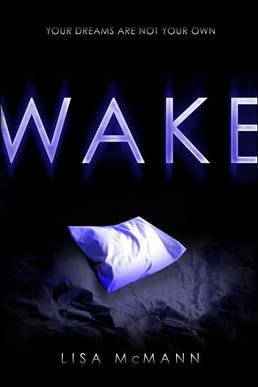
Wake by Lisa McMann

time spent reading: 3.45 hours

pages read: 210


This book was not so great. It was on the level of the DaVinci Code or a Lifetime channel original movie - stupidly stupid but with mass appeal.

Janie discovers at a young age that whenever she gets near a sleeping person, she gets sucked into his dream, much to her chagrin. Most people dream they're naked in a room full of people, or that they're falling, or dream about their greatest desires and worst fears. Janie comes to know more about people, and perfect strangers, than she cares to.

Her senior year, Janie runs into a boy she used to know. He's had an extreme makeover, going from greasy goth guy to pulled-together, glasses-wearing cutie. The girls at school think he's a new kid, that's how well they recognize him. He and Janie grow close and eventually he learns her secret. Afterward, he seems to distance himself from Janie, and she learns through a friend that he is hooking up with her enemy and possibly selling dope. What's a girl to do?

I could deal with the short, choppy sentences and even the choppy storyline punctuated by dates and times, but I couldn't get used to the cheesy, inauthentic dialogue. Listen, nobody says 'rents. Nobody ever has. And meeting the Captain? That pushed this story far into the Lifetime television, paperback novel sold at your local grocery store or pharmacy. Finally, I find it unbelievable that there would be so many kids and adults who fall asleep napping at school and the office. Silly, silly, silly.

Just Finished Reading...

The Summer of the Swans by Betsy Byars


time spent reading: 1.5 hours


pages read: 129


I grabbed this book off the shelf because it was short, and I wanted to feel a sense of accomplishment first thing this morning. It turns out I really enjoyed this short children's story. Sara lives with her Aunt Willie along with her 19-year-old sister, Wanda, and her mentally handicapped brother, Charlie, after her mother passed away. Sara's father works in another town and visits occasionally on the weekends. One summer morning, Sara wakes up and finds her brother has disappeared. He got up in the middle of night wanting to see the swans at the lake Sara had taken him to the day before, but he couldn't remember the way and got himself lost in the woods.


I liked this story because it reminds me of my grandmother, and how she probably grew up. The characters are real people and funny to listen to. They all share the same names as my grandmother's family and friends: Midge, Frank, Wanda, etc. It reminds me of the "good ole' days" when there was only one television program to choose from, and people got excited about the little things. Everyone knew each other, and everyone was cordial.


Sara is an adolescent who is discontent with life. She thinks she's ugly and has clown feet made all the worse by her "Donald Duck" orange-dyed tennis shoes.


Up until this year, it seemed, her life had flowed along with rhythmic evenness. The first fourteen years of her life all seemed the same. She had loved her sister without envy, her aunt without finding her coarse, her brother without pity. Now all that was changed. She was filled with discontent, and anger about herself, her family, that made her think she would never be content again. p.35


Really, this is nothing more than what every 14 year old girl feels at one point or time.


"I feel like I want to start screaming and kicking and I want to jump up and tear down the curtains and rip up the sheets [...] I want to yank my clothes out of the clsoet and burn them and -"


"Well, why don't you try it if it would make you feel better?"


"Because it wouldn't." [...] "I just feel like nothing."


"Oh, everybody does at times, Sara."


"Not like me. I'm not anything. I'm not cute, and I'm not pretty, and I'm not a good dancer, and I'm not smart, and I'm not popular. I'm not anything." p. 39


The story only covers a 24 hour period, from one evening to the next. That's not enough time for a character to actually grow and change a whole lot. Sara is still Sara, but she finds that she had misjudged a boy from her school and maybe her father, too.


The humor in the characters' conversations is also what makes the story so enjoyable. As Sara and her friend Mary are tryin to figure out where Charlie went, Mary suggests they go back to the house as he may be there. Sara knows that won't be the case, and she repeats this again and again.


"I know he won't be."


"Well, don't get discouraged until we see." [...] "You know who you sound like? Remember when Mary Louise was up for class president and she kept saying, 'I know won't get it.' For three days that was all she said."


"And she didn't get it."


"Well, I just meant you sounded like her, your voice or something," Mary explained quickly. p. 61


Saturday, June 4, 2011

#48HBC 12+ hours

Done for today.

Hours devoted to 48HBC: 12.25 hours
books read: 2
pages read: 490
audiobook: 3.5 hours (Beastly by Alex Flinn)
blogging: 2 hours

G'night.

#48HBC Update


Just finished reading...

The Gammage Cup by Carol Kendall - p. 170-283 finished

This is a book I've ready many times when I was younger. I shared it as a read-aloud to my sixth graders, but never got the chance to finish it with them. So, I picked up where I left off and read the rest.

113 pages read

#48HBC Book One


#48HBC Book One

I finally finished The Dark and Hollow Places. I feel like such a slow reader for taking around 7 hours to read it. (I spent part of my late morning listening to Beastly on audiobook while I cleaned up.) This book is the apparent end to The Forest of Hands and Teeth trilogy, although neither the second or third book lives up to the first. There was so much potential for this story, and it all got lost somewhere in between the silly love stories, chases, near deaths, and evil Recruiters. There was no big revelation or glint of real hope for the survivors. I'm exhausted not from the length of time it took reading this, but from Annah's constant fight and struggle to stay alive. It never ended.


pages: 377

time spent reading: roughly 7 hours